Setting a New Standard in Tempe
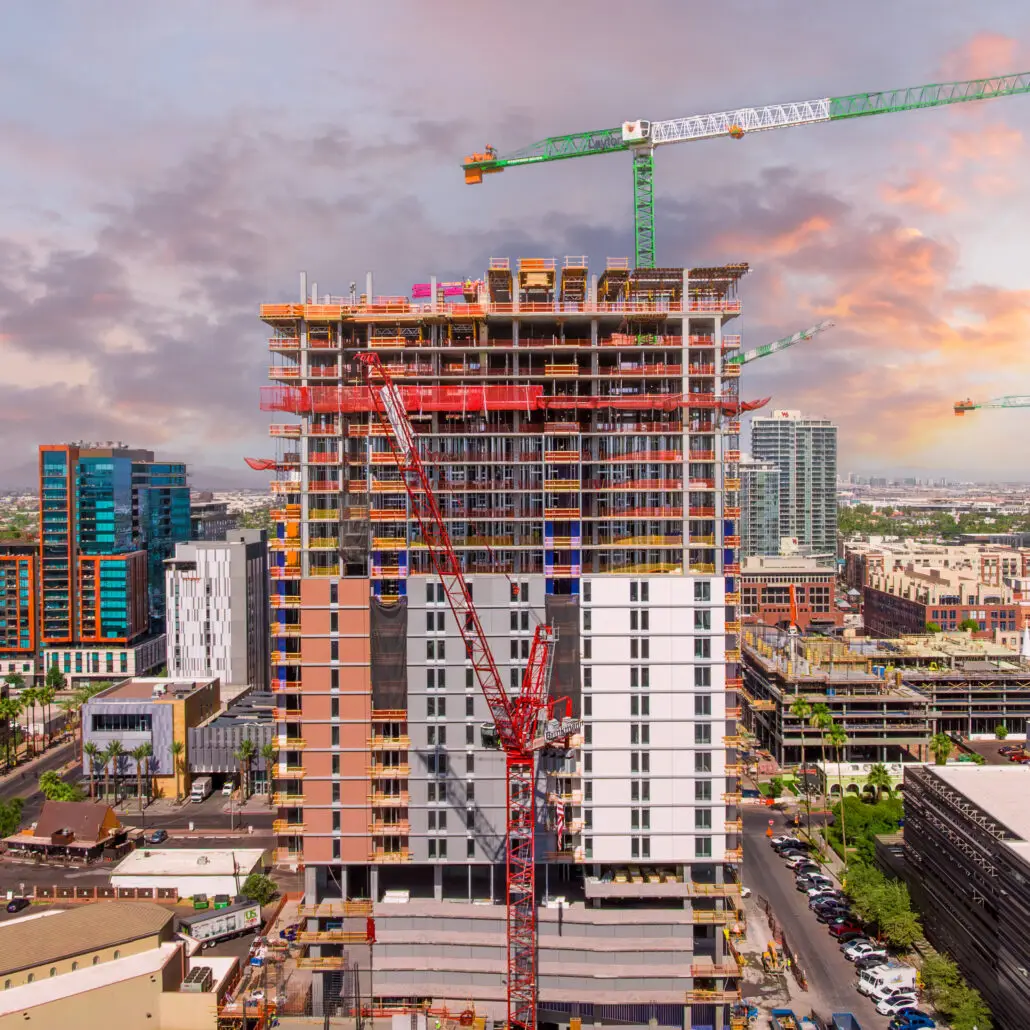
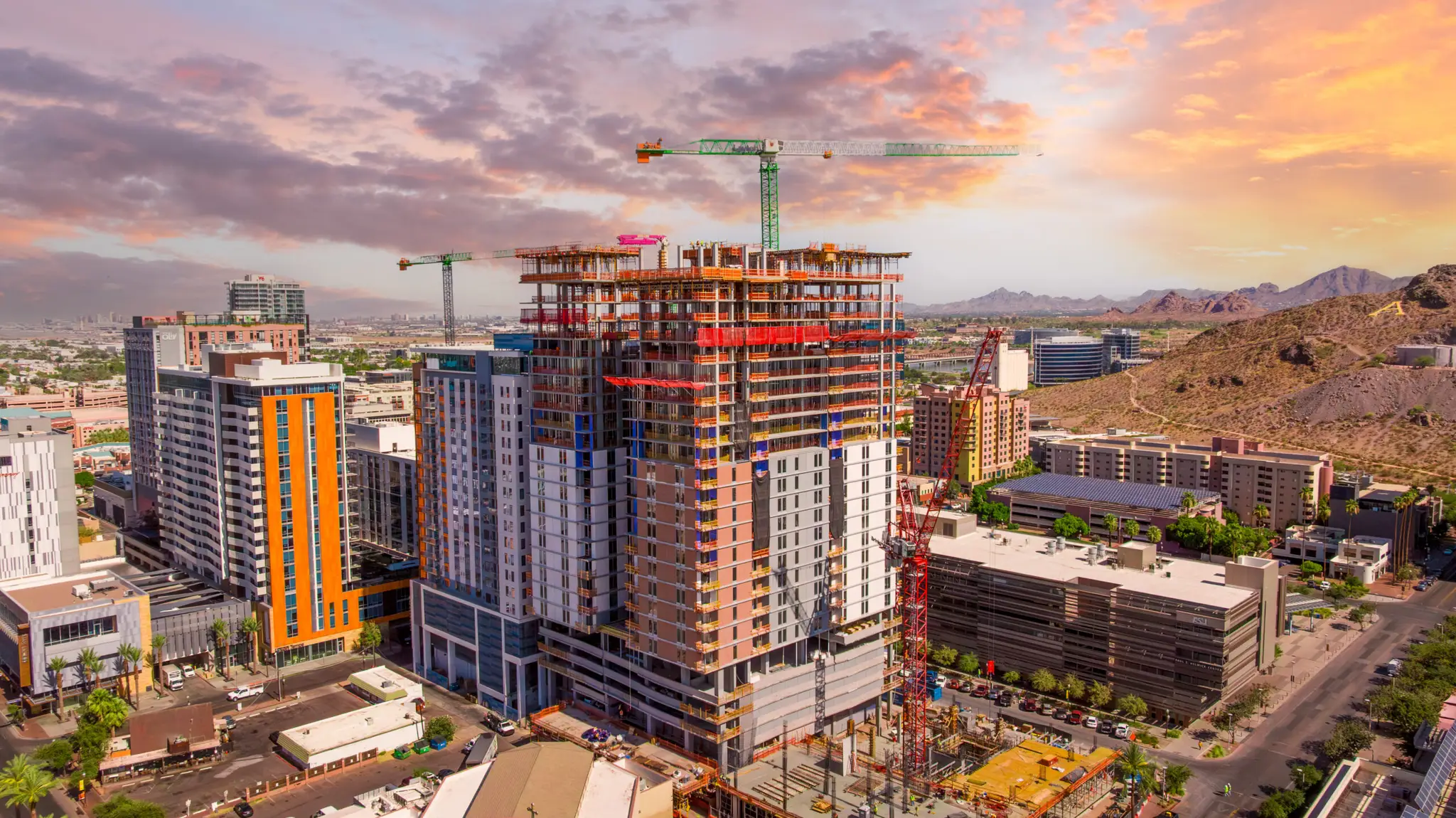
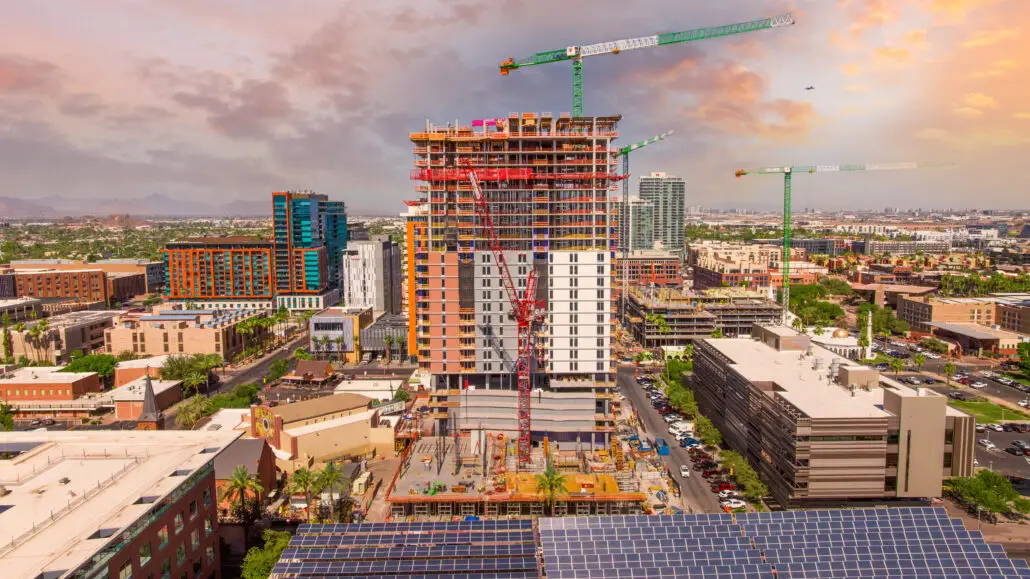
Right next to the Arizona State University campus, the Southwest skyline is evolving. The Astria Project, a privately developed 27-story student housing tower, serves as a premier field demonstration of high-strength, sustainable concrete performance. As the concrete contractor, our employee-owners at Suntec are executing one of the first western United States high-rise applications of CalPortland ADVANCEMENT HPT, Type 1T ternary blended cement. This project proves that lower-carbon materials can seamlessly support structural elements ranging from massive slab-on-grade pours to towering, high-strength vertical columns.
The Science Behind the Pour
At the core of this structural achievement is CalPortland’s ADVANCEMENT HPT, a Type 1T ternary blended cement featuring approximately 20% clinker replacement. Because natural pozzolan is already integrated into the cement, the mix design remains tightly controlled and highly performant without the need for additional supplementary cementitious materials.
To support the massive scale of the Astria Project, this novel cement is paired with Chryso Optima 1130 and Chryso Zyla 625 admixtures. This precise combination ensures the water reduction, rheology control, and mix stability required for our crews to maintain predictable pumpability and placement efficiency across varying structural demands. The resulting concrete strength is exceptional, scaling from 4,000 psi for the slab-on-grade to 6,000 psi for elevated decks, 8,000 psi for upper vertical elements, and up to 10,000 psi for lower-level columns and shear walls.
Field Execution and Schedule Acceleration
Advanced materials require elite technical coordination on the jobsite. The concrete mixture was specifically engineered to support the intense demands of a high-rise schedule. With reliable set characteristics and rapid strength development, our field crews are maintaining an aggressive construction pace of one entire floor per week. In fact, the reliable performance of this concrete has allowed our teams to push the Astria Project roughly two weeks ahead of schedule.
Austin Kirkpatrick, Suntec’s Vice President of Construction, highlights the operational impact of this reliability. He notes that while hitting 3,000 psi at 24 hours kept the project moving, the true difference on the jobsite was the absolute consistency in set times. Our finishers knew exactly when to get on the slab for every single pour, and the mix retained the workability needed to deliver the superior finish quality expected from a Suntec crew.
Meaningful Carbon Reduction in the Southwest
Beyond structural integrity, the Astria Project represents a significant step forward in reducing environmental impact. With approximately 25,000 cubic yards of concrete being placed, the use of ADVANCEMENT HPT Type 1T cement achieves an estimated 18-19% reduction in embodied carbon compared to traditional Portland cement. This demonstrates that lower-clinker technologies can successfully drive carbon reduction objectives without sacrificing the consistency required for urban high-rise developments.
Collaborative Industry Innovation
Delivering a project of this magnitude requires deep collaboration across the construction industry. Angela Slone, district manager for Chryso, emphasized that Astria is a vital example of how advanced admixture technologies can meet complex structural demands, ensuring consistent field execution.
Similarly, Lauro Rivas, Vice President of Technical Services for CalPortland’s materials group, noted that extensive lab testing and coordinated execution resulted in a mix that exceeded both early and ultimate strength requirements without impacting the schedule. Being part of a venture that sets new industry benchmarks for quality and sustainability is incredibly gratifying for all partners involved.
Read more: HERE